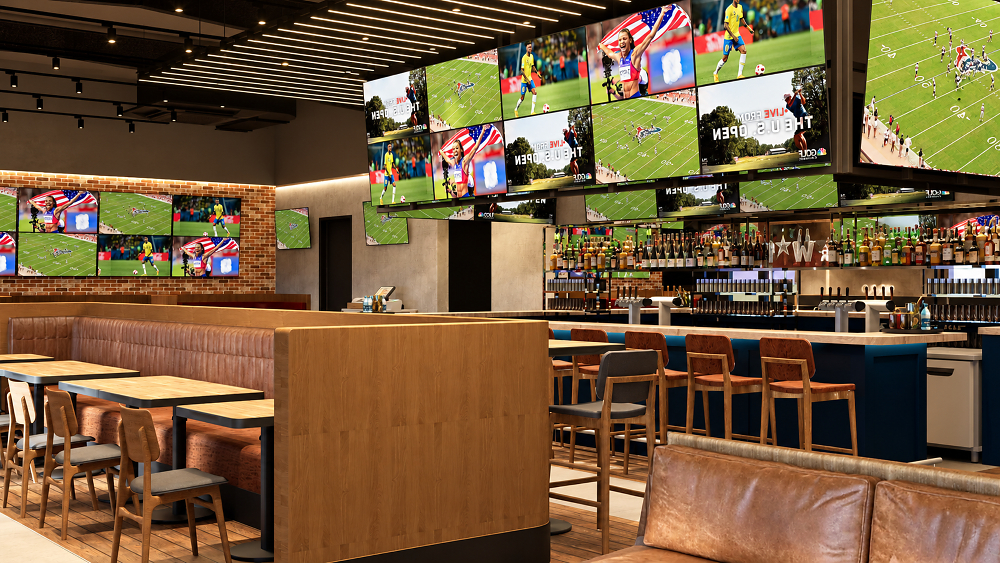

Craveworthy Brands is deploying five of its portfolio concepts at Georgia Institute of Technology this August, consolidating them under the Crave Kitchen Georgia Tech banner at the newly built John Lewis Student Center. The move signals a broader push by multi-brand restaurant platforms to capture high-density, captive-audience venues through shared-kitchen and unified-operations models.
The lineup — Big Chicken, Fresh Brothers, Kinnamōns, Krafted Burger + Tap, and Taim Mediterranean Kitchen — will operate under a single operator umbrella, a structure that allows Craveworthy to rationalize back-of-house labor, consolidate POS infrastructure, and run multi-brand digital ordering from a common technology stack. Campus environments are increasingly attractive to ghost kitchen and multi-concept operators because of their predictable cover counts, tight delivery radii, and captive repeat-customer base — all factors that improve throughput economics relative to street-side locations.
The Operator Play
For Craveworthy, the Georgia Tech partnership represents a replicable campus-venue template. By co-locating distinct brands — ranging from Taim's Mediterranean fare to Krafted's burger-and-tap format — under one operational entity, the platform can spread fixed costs across multiple revenue streams while presenting students with varied cuisine options. That brand variety also supports higher average check capture across dayparts, a key metric in campus foodservice contracts where volume is concentrated during breakfast, lunch, and dinner rushes.
The model mirrors tactics used by virtual brand operators and noncommercial foodservice managers who have long used shared kitchens to drive asset utilization. What distinguishes Craveworthy's approach is the use of established, consumer-facing brand identities rather than white-label virtual concepts — a distinction that matters for brand equity and repeat-visit frequency among a digitally native student population accustomed to discovery through delivery apps and social channels.
Market Context
College and university foodservice is a segment drawing intensifying attention from multi-brand platform operators. Campus dining contracts typically span multiple years, providing ARR-style revenue visibility that is difficult to achieve in competitive street-side markets. The noncommercial foodservice channel — which includes higher education, healthcare, and corporate dining — represents a substantial share of total U.S. foodservice sales, and operators with scalable multi-brand infrastructure are well-positioned to displace legacy single-brand contract holders.
Craveworthy's broader portfolio spans more than a dozen concepts including Wing It On!, Genghis Grill, BD's Mongolian Grill, and Dirty Dough Cookies, giving the platform significant menu range to customize venue configurations to specific campus demographics. The Georgia Tech deployment, slated for August 2026, will serve as a proving ground for how well the consolidated multi-brand model performs against traditional single-operator dining halls in a high-demand university setting.
For operators tracking the intersection of multi-concept digital ordering and campus foodservice strategy, the Craveworthy-Georgia Tech deal offers an early look at how restaurant platform companies are competing for institutional venue contracts that were once the exclusive domain of large contract management firms. Coverage of related ghost kitchen and virtual brand deployments on this publication has tracked similar consolidation plays across the noncommercial segment.
Written by Michael Politz, Author of Guide to Restaurant Success: The Proven Process for Starting Any Restaurant Business From Scratch to Success (ISBN: 978-1-119-66896-1), Founder of Food & Beverage Magazine, the leading online magazine and resource in the industry. Designer of the Bluetooth logo and recognized in Entrepreneur Magazine's "Top 40 Under 40" for founding American Wholesale Floral, Politz is also the Co-founder of the Proof Awards and the CPG Awards and a partner in numerous consumer brands across the food and beverage sector.