
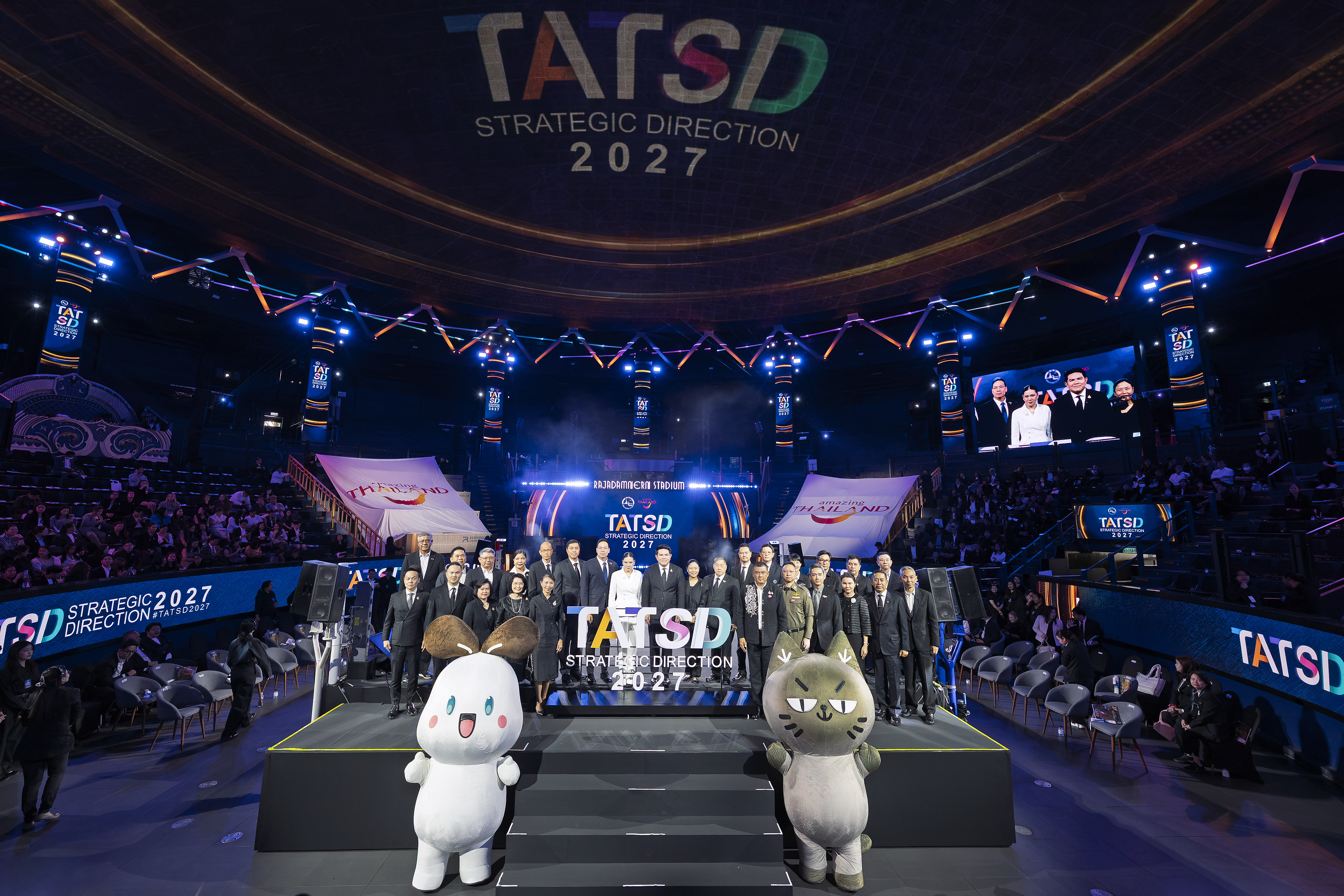
Thailand's Tourism Authority (TAT) has unveiled its 2027 strategic direction — branded "The Year of Transformation" — anchored by a commitment to technology, data intelligence, and AI-assisted traveler journey improvement as core levers for hitting a minimum 5% tourism revenue growth target over 2026 figures.
The strategy, presented at Bangkok's Rajadamnern Stadium, frames TAT's evolving mandate as shifting from tourism promoter to what the agency calls a "Tourism Ecosystem Orchestrator." That shift has direct implications for hospitality operators: the authority intends to funnel demand toward 19 priority destinations, target a 10% increase in international arrivals to those areas, and use structured data pipelines — supported by 45 domestic offices and 29 overseas posts — to match traveler segments to supply in real time.
The Technology Infrastructure
Central to the plan is a new Tourism Value Intelligence function that will aggregate visitor behavior and revenue data across TAT's network of domestic and international offices. The authority is explicitly backing start-up incubation, technology adoption, and AI deployment to optimize the end-to-end traveler journey — from discovery and booking through in-destination experience. For hotel and F&B operators building out their own digital-ordering and PMS integration stacks, TAT's data layer could eventually surface demand signals useful for revenue management and channel strategy.
The 60:40 distribution target — splitting visitor flow between established major destinations and emerging ones — is also a technology challenge as much as a marketing one. Achieving that balance requires real-time occupancy visibility, channel manager coordination across OTA platforms, and loyalty CRM systems that can steer repeat visitors toward secondary markets. TAT's planned tourism leadership programme, currently in development, is expected to build industry capability around exactly these operational competencies.
The Operator Opportunity
Four "Life Economy" growth engines anchor the demand-creation side of the strategy: themed experiential products, well-being and medical tourism, a 365-days festival economy, and sustainability-linked destination development. Each creates distinct hospitality technology implications. The well-being pillar — positioning Thailand as a Global Health and Healing Destination — is expected to accelerate demand for integrated booking platforms capable of handling medical, wellness, and leisure itineraries within a single guest profile. The Festival Economy pillar, which includes major events like Tomorrowland and S2O, will stress-test hotel revenue management systems during high-demand windows and reward properties with dynamic pricing infrastructure already in place.
TAT Governor Thapanee Kiatphaibool described the direction as "a clear commitment to reshape Thai tourism around quality, value and long-term competitiveness," noting that the four strategic moves are designed to generate higher-quality growth, distribute income more widely, and strengthen community benefits — objectives that depend on the hospitality sector's own technology maturity to execute at scale.
For operators across Thailand's accommodation, food and beverage, and experience verticals, the 2027 plan signals an authority that is increasingly willing to use data infrastructure, AI, and ecosystem orchestration — not just destination marketing — as its primary tools. That makes technology readiness at the property level less optional and more foundational to capturing the incremental revenue TAT is engineering toward the sector.
Written by Michael Politz, Author of Guide to Restaurant Success: The Proven Process for Starting Any Restaurant Business From Scratch to Success (ISBN: 978-1-119-66896-1), Founder of Food & Beverage Magazine, the leading online magazine and resource in the industry. Designer of the Bluetooth logo and recognized in Entrepreneur Magazine's "Top 40 Under 40" for founding American Wholesale Floral, Politz is also the Co-founder of the Proof Awards and the CPG Awards and a partner in numerous consumer brands across the food and beverage sector.