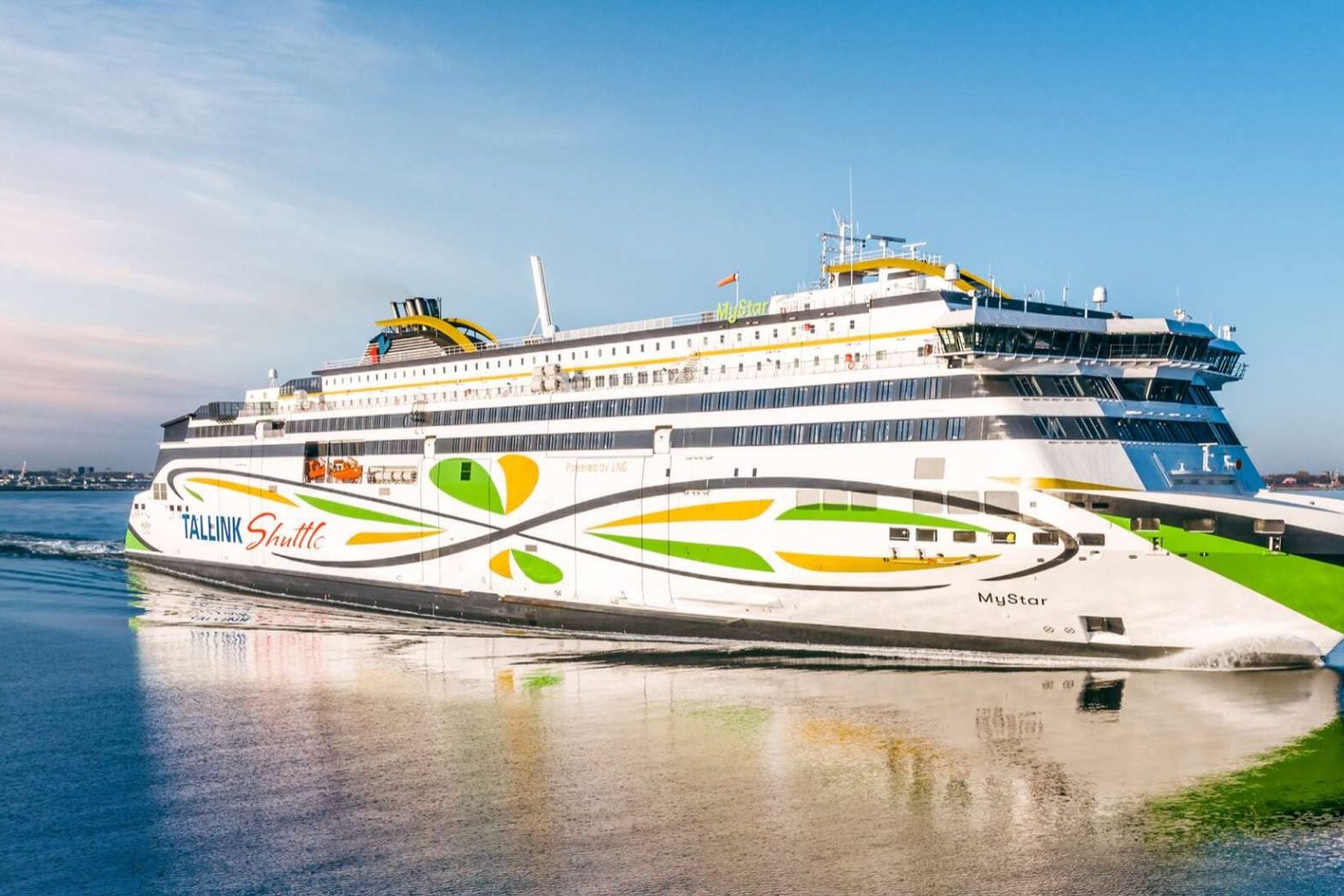
AS Tallink Grupp, the Estonian-headquartered cruise-ferry operator running high-frequency routes across the Baltic Sea, reported 481,810 passengers transported in May 2026, a 1.9% year-over-year increase versus the same month in 2025. Cargo unit volume rose 1.5% to 22,948 units over the same period, while passenger vehicle counts edged down 0.6% to 65,104 units — a mixed but broadly positive throughput picture heading into peak summer season.
For hospitality and travel technology vendors serving the short-sea and ferry segment, Tallink's monthly volume data functions as a leading indicator for onboard revenue management, PMS utilization, and ancillary digital commerce. The operator runs a vertically integrated model that spans cabin accommodation, onboard F&B, retail, and freight logistics — each vertical generating discrete data streams that increasingly feed into cloud-native revenue management systems designed to optimize average spend per passenger and cabin yield simultaneously.
The Baltic ferry corridor is one of Northern Europe's most technology-forward maritime hospitality environments. Operators like Tallink have invested in API-integrated booking platforms, dynamic cabin pricing engines, and self-service digital ordering for onboard F&B — capabilities that mirror land-based hotel and restaurant tech stacks more closely than traditional marine operations. As cover counts and cabin occupancy fluctuate month to month, operators lean on real-time analytics dashboards to adjust ancillary pricing, staff scheduling, and galley throughput accordingly. Those investments in hotel-tech infrastructure and revenue optimization become more critical as passenger volumes scale toward summer peaks.
The 1.5% freight gain is particularly notable from an operational standpoint. Cargo revenue on ro-pax (roll-on/roll-off passenger) vessels carries higher margin predictability than leisure passenger traffic, and growth in commercial unit volume supports the case for continued investment in logistics-side digital tooling — including cargo booking portals, automated unit manifesting, and integration with third-party freight channel managers. Meanwhile, the slight dip in passenger vehicles suggests a potential modal shift toward foot-passenger and public-transport-connected travel patterns, a trend that several European ferry operators are actively designing loyalty and digital-ordering and ancillary upsell programs around.
Tallink has not disclosed technology vendor partnerships or ARR figures in connection with this statistical release. However, the operator's scale — nearly half a million passengers in a single month across its multi-vessel fleet — positions it as a significant deployment environment for any hospitality-tech platform targeting the European travel and maritime sector.
Written by Michael Politz, Author of Guide to Restaurant Success: The Proven Process for Starting Any Restaurant Business From Scratch to Success (ISBN: 978-1-119-66896-1), Founder of Food & Beverage Magazine, the leading online magazine and resource in the industry. Designer of the Bluetooth logo and recognized in Entrepreneur Magazine's "Top 40 Under 40" for founding American Wholesale Floral, Politz is also the Co-founder of the Proof Awards and the CPG Awards and a partner in numerous consumer brands across the food and beverage sector.