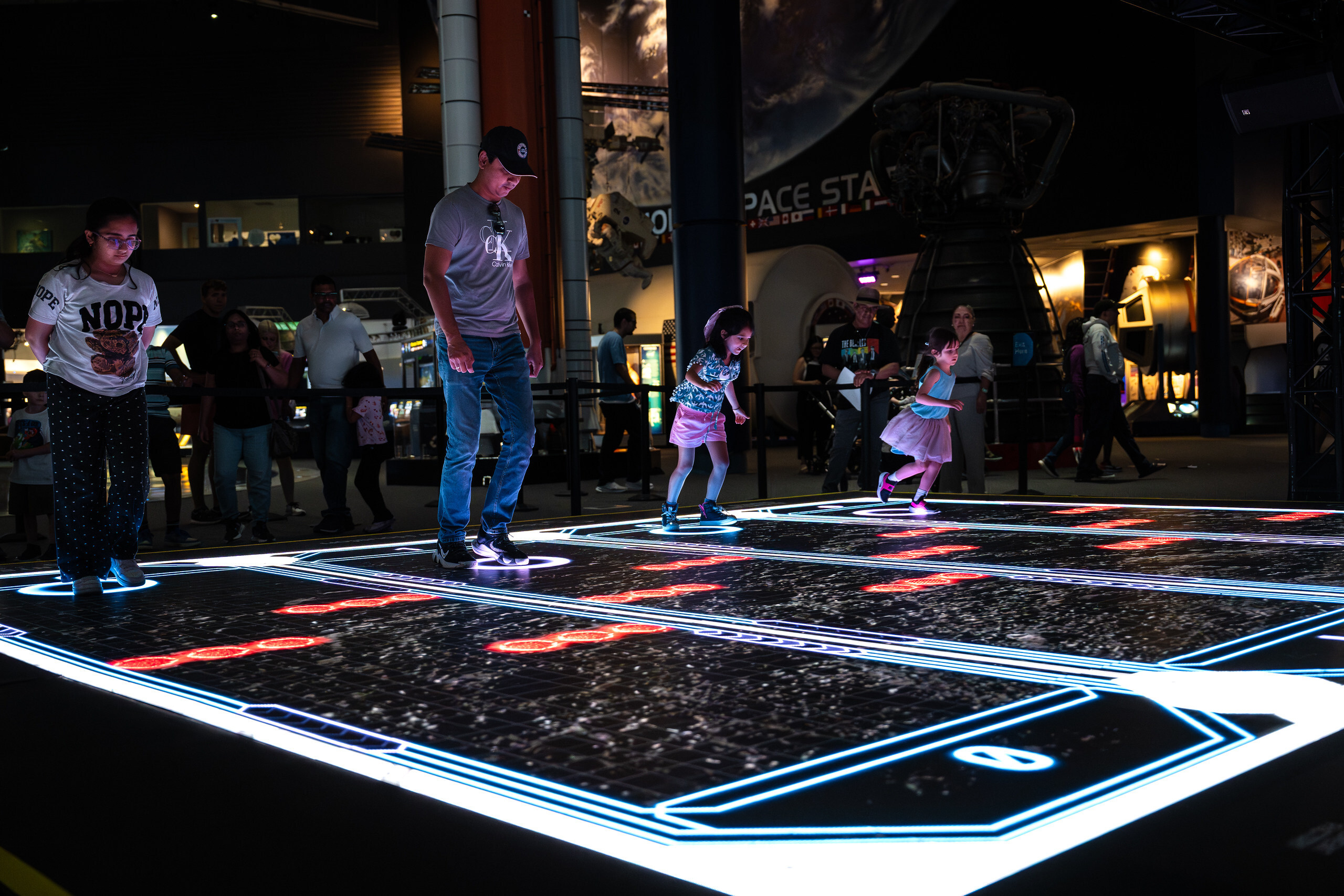
Space Center Houston has launched Galaxy's Game, a limited-run experiential activation that runs through July 31, 2026, designed to capitalize on FIFA World Cup 2026™ foot traffic and global sports enthusiasm converging on the Houston market this summer. The attraction positions the science center as a destination layer for the millions of soccer tourists and domestic visitors moving through Texas during one of the largest sporting events in the world.
The activation centers on immersive, physical programming that draws a narrative line between athletic performance and space exploration — think astronaut conditioning, lunar obstacle challenges, and sport-science exhibits framed around the demands of human spaceflight. The flagship element, Lunar Obstacle Run, puts guests through a physical course inspired by the training regimens NASA uses to prepare crews for off-planet environments. The experience is designed to increase average dwell time per visitor, a key throughput metric for destination attractions managing capacity and per-cap revenue.
For hospitality and attractions operators in the Houston metro, the timing is deliberate. FIFA World Cup 2026 is expected to generate significant hotel occupancy lift and incremental leisure spend across host and hub cities, and cultural institutions are increasingly competing with stadiums and watch parties for share of visitor wallet. Activations like Galaxy's Game represent a broader industry trend of attraction operators layering event-driven programming to smooth revenue curves and reduce dependence on school-group seasonality.
From a technology and operations standpoint, limited-time experiences of this type stress-test ticketing infrastructure, dynamic capacity management, and guest-flow systems. Attractions operators running timed-entry models — a post-pandemic standard across major U.S. science centers and theme parks — rely on integrated POS and reservation platforms to manage surge demand without degrading the guest experience. How Space Center Houston routes FIFA-adjacent visitors through its broader campus will be a case study in visitor management and upsell architecture as the World Cup window peaks in late June and July.
Space Center Houston's move reflects a wider playbook emerging among non-sports venues: align programming calendars to mega-events, build ancillary experiences that extend length of stay, and capture incremental food-and-beverage and retail spend from audiences who might not otherwise visit. For the attractions and cultural-institution segment, summer 2026 represents a material revenue opportunity — and operators who invested in flexible experiential infrastructure heading into the World Cup cycle are positioned to capture it.
Written by Michael Politz, Author of Guide to Restaurant Success: The Proven Process for Starting Any Restaurant Business From Scratch to Success (ISBN: 978-1-119-66896-1), Founder of Food & Beverage Magazine, the leading online magazine and resource in the industry. Designer of the Bluetooth logo and recognized in Entrepreneur Magazine's "Top 40 Under 40" for founding American Wholesale Floral, Politz is also the Co-founder of the Proof Awards and the CPG Awards and a partner in numerous consumer brands across the food and beverage sector.