
Lightspeed Commerce (NYSE: LSPD) is pushing a broad product update across Lightspeed Restaurant, Lightspeed Retail, and Lightspeed Golf, adding AI-powered reporting, Reserve with Google booking, QR-code guest payments, and a Meta Conversions API bridge that closes the loop between digital ad spend and in-store point-of-sale data. The release positions the Montreal-based platform as a full-stack demand-capture and operations layer for operators running across more than 100 countries.
AI and Payments at the Table
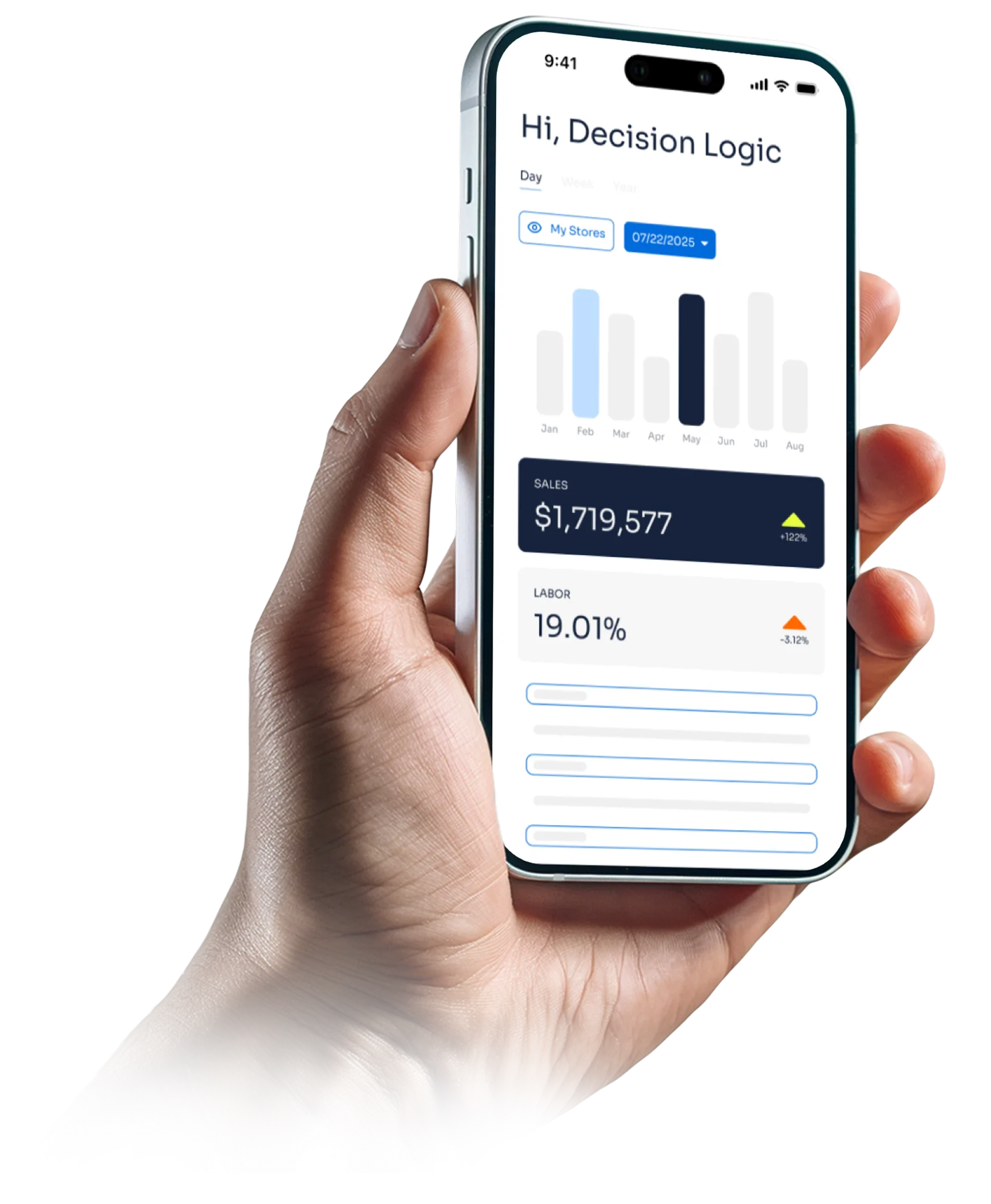
On the hospitality side, the most operator-relevant additions center on payment throughput and business intelligence. Lightspeed AI now surfaces Custom Charts — merchant-defined views built from AI-generated queries — and converts them into live dashboard tiles that refresh with every new transaction. Saved Charts function as self-updating reports, keeping key revenue and cover-count metrics current without manual pulls. For high-volume restaurants, a new 8-inch Customer Display integrates directly with Lightspeed Payments to keep order accuracy high and checkout moving. The hardware is currently available to select customers.
Scan to Pay, currently in beta, lets guests scan a QR code on their printed receipt to view the bill, split payment, add a tip, and complete the transaction from a personal device — a workflow that reduces server touchpoints and accelerates table turn. An enhanced Pay at Table app lets servers retrieve checks, split bills, and process payments via Lightspeed Payments Smart Terminals tableside. Both features integrate natively with Lightspeed Restaurant, avoiding the middleware overhead that typically accompanies third-party payment bolt-ons. Operators tracking labor management efficiency will note that the Pay at Table workflow is designed to cut the back-and-forth between the floor and the POS terminal.
Connecting Discovery to Demand
Reserve with Google is now live inside Lightspeed Reservations, allowing diners to see availability and book directly from Google Search and Maps without being redirected to a third-party site. The feature shortens the conversion path from discovery to confirmed cover — a measurable gap that operators on OTA-heavy booking stacks know well. For restaurants looking to reduce dependence on third-party reservation platforms and their associated take rates, native Google booking is a meaningful channel shift.
On the retail side, the Meta Conversions API integration lets brick-and-mortar merchants sync their in-store product catalog and securely pass POS transaction data to Meta, enabling campaign optimization against actual in-store revenue rather than proxy signals like clicks or page views. The integration requires no ecommerce store, lowering the barrier for single-location independent operators. Lightspeed also connected ShipStation directly to its POS and ecommerce platforms, routing orders through a unified dashboard so merchants can ship out-of-stock or special-order items to customers without manual workarounds.
For golf course operators — a vertical Lightspeed has built out aggressively — the new On Deck feature creates a waitlist mechanism: golfers submit preferred tee-time requests, and when a cancellation opens a matching slot, an automated email delivers a direct booking link. The workflow converts recovered inventory into incremental revenue without requiring staff intervention, a useful automation for courses managing digital operations across busy seasons.
What It Means for Operators
"Businesses don't need more disconnected tools, they need technology that turns complexity into clear business value," said Dax Dasilva, Founder and Chief Executive Officer of Lightspeed. Chief Technology Officer Bhawna Singh framed the AI direction plainly: the platform is moving toward using connected commerce data — transactions, inventory, customers, operations — to surface intelligence operators can act on in real time, not just report on after the fact.
The update arrives as restaurant and retail operators contend with rising operational complexity across more digital and physical channels simultaneously. Lightspeed's approach — embedding AI analytics, payment hardware, booking integrations, and advertising attribution inside a single platform — reflects a broader SaaS consolidation trend in hospitality tech, where operators are actively reducing the number of point solutions they manage. Platforms that can demonstrate measurable impact on average check, cover count, and ad-spend efficiency will have an easier path to retention and expansion ARR in a competitive market.
Written by Michael Politz, Author of Guide to Restaurant Success: The Proven Process for Starting Any Restaurant Business From Scratch to Success (ISBN: 978-1-119-66896-1), Founder of Food & Beverage Magazine, the leading online magazine and resource in the industry. Designer of the Bluetooth logo and recognized in Entrepreneur Magazine's "Top 40 Under 40" for founding American Wholesale Floral, Politz is also the Co-founder of the Proof Awards and the CPG Awards and a partner in numerous consumer brands across the food and beverage sector.