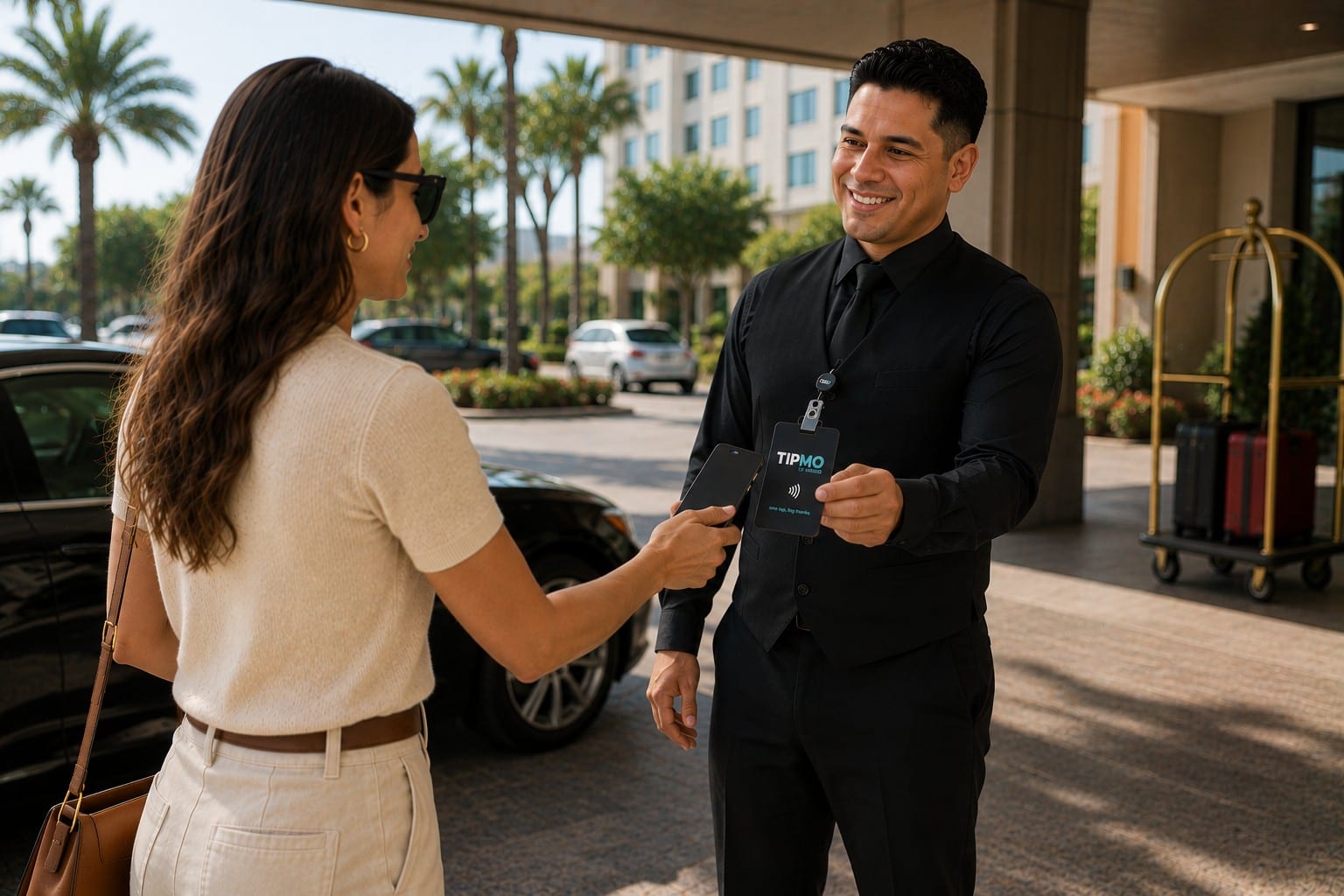
The Cash-Tip Gap Widens Valet attendants—among the most visible hotel employees—are losing gratuities as guests abandon cash. A Canary Technologies survey found that 79% of hotel guests believe hotel workers should receive tips, yet only about 30% actually leave one. More significantly, over 70% of non-tippers said they would have tipped if a digital option had been available. For valets who create the first and last impression of a hotel, that gap represents lost income and diminished recognition for service. Unlike housekeeping staff, valets have repeated face-to-face interactions with guests, making them historically among the strongest earners for gratuities. But visibility no longer guarantees a tip when guests carry only credit cards and mobile wallets.
Tipping as Employee Retention Tool Hotels are beginning to view digital tipping as more than payment convenience—it is an employee engagement strategy. "Tips are about far more than income. They are immediate recognition," according to an industry analysis. When employees know exceptional service can still be rewarded in a cashless environment, motivation increases and staff feel appreciated. Labor retention remains one of hospitality's greatest operational challenges. Recruiting and training are expensive, and every resignation strains remaining staff. Digital tipping increases earning potential without increasing payroll costs, offering operators a meaningful competitive advantage. For multi-property management companies, the advantage compounds. Consistent digital tipping across a portfolio becomes a standardized employee benefit that strengthens recruiting: "Instead of telling prospective employees, 'We offer competitive wages,' management companies can confidently say, 'We have invested in technology that helps you earn more.'" Consistency also reinforces the operator's commitment to frontline employees and meets guest expectations for contactless experiences throughout their stay.
NFC Technology vs. QR Codes Many operators implemented QR code-based tipping because it was inexpensive, but the technology introduced friction. Guests must locate the code, open their camera, scan, wait for browser load, and navigate to payment—each step reducing participation. Near Field Communication (NFC) technology changes the experience. Guests simply tap their phone against an NFC-enabled badge, much like retail tap-to-pay transactions. The interaction is faster, more intuitive, and significantly more secure because advanced NFC can use encrypted authentication, unlike static QR codes that can be copied or replaced. For mobile employees such as valets, bell staff, and shuttle drivers, portability is a critical advantage. A QR code is attached to a sign; an NFC credential travels with the employee. "The easier it becomes for guests to recognize and reward exceptional service in the exact moment it occurs, the more often those moments happen."
Why It Matters
Hotels have invested heavily in guest-facing technology—mobile check-in, digital keys, contactless payments. Digital tipping represents parallel investment in the employees who create memorable experiences. For operators managing labor shortages and competing for staff, closing the tipping gap is both a retention tool and a signal of organizational values.
For more insights and trends in the food and beverage sector, check out more articles in The Food & Beverage Magazine family of publications.
Written by FBM Publications Editors