
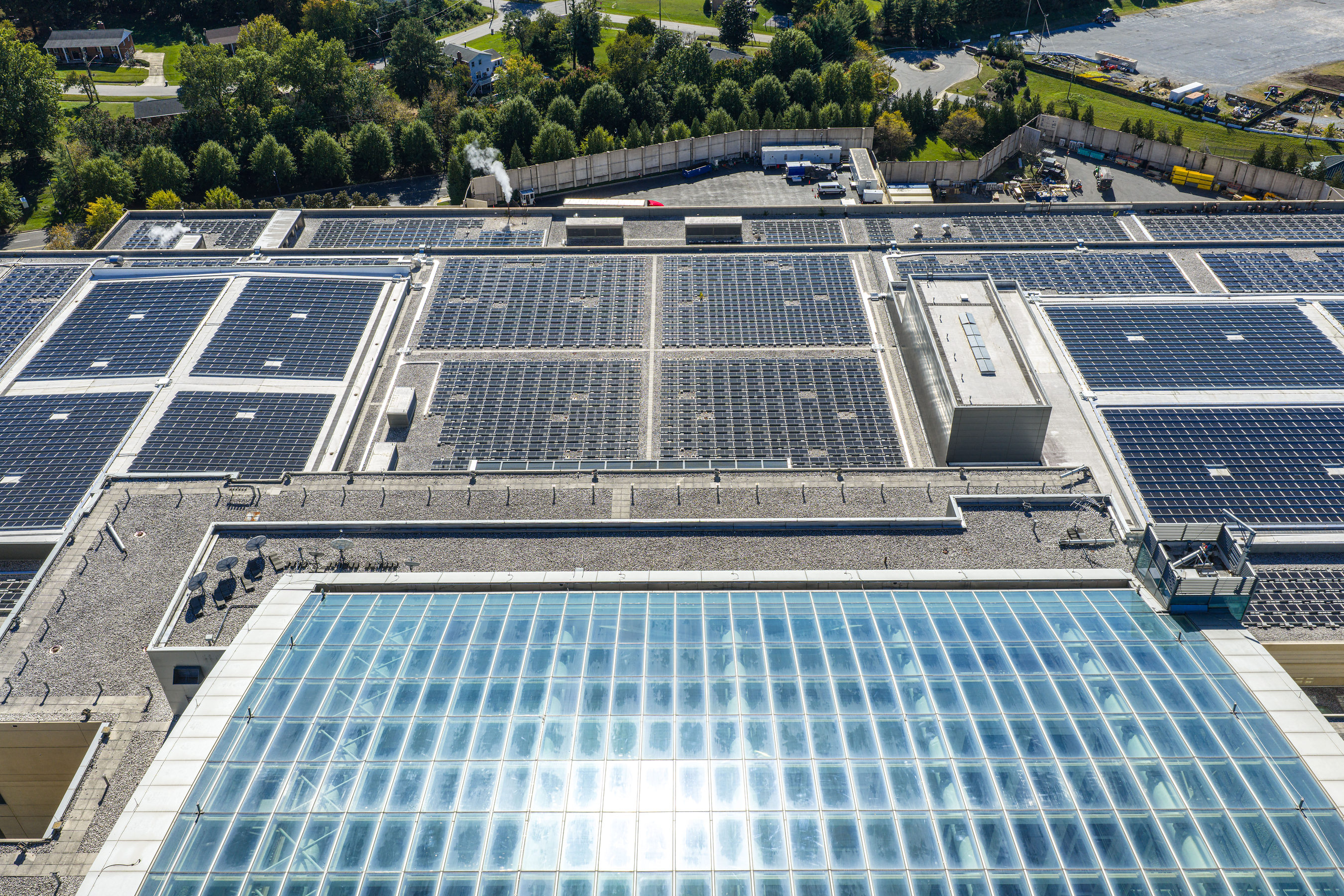
Gaylord National Resort & Convention Center has fully activated a 4,696-panel rooftop solar installation spanning approximately 3.5 acres atop its convention center in National Harbor, Maryland — one of the largest on-site renewable energy deployments at a U.S. convention hotel. The system, developed in partnership with REV Energy Ventures, is projected to generate nearly 3.4 million kilowatt-hours of renewable electricity annually and offset up to 50% of the electricity the property purchases from the local utility.
Scale and Systems Integration
The solar array is expected to supply as much as 20% of the resort's electrical load during peak production periods. Since activating in June 2026, the system has already generated approximately 495,316 kilowatt-hours — equivalent to powering roughly 48 average U.S. households for a year — while avoiding an estimated 333 metric tons of CO₂ emissions. At full annual output, the array is projected to avoid 2,285 metric tons of CO₂ and generate enough electricity to power approximately 331 average U.S. homes, based on EPA methodology.
The solar installation integrates with an on-site combined heat and power (Cogen) system that has been operating since 2018. Together, the two systems are engineered to meet more than 75% of the resort's total energy needs. The Cogen system generates electricity while recovering waste heat for building heating, and continuous building-systems monitoring ties both assets into a unified energy-management strategy. Derek Brauner, director of engineering at Gaylord National, described the layered approach: "By generating electricity on-site, capturing thermal energy that would otherwise be wasted and continuously monitoring our building systems, we are able to operate more efficiently."
Why It Matters for Hotel Operators
For large-format hospitality properties — particularly convention resorts with high base loads driven by HVAC, food-and-beverage operations, and event infrastructure — on-site generation offers a meaningful lever for controlling energy costs and reducing exposure to utility rate volatility. Gaylord National's nearly 2,000-room property hosts a high volume of meeting attendees and convention visitors, making energy resilience a direct operational priority, not just an ESG checkbox.
The project is owned by Ryman Hospitality Properties, Inc. (NYSE: RHP), a REIT that operates five of the top seven largest non-gaming convention center hotels in the United States, and is managed under Marriott International's portfolio. Mark Fioravanti, President and CEO of Ryman Hospitality Properties, framed the investment in operational and financial terms: "We're reducing demand on the local power grid while improving operational efficiency and strengthening the resort's climate resiliency for years to come." The initiative also advances Marriott International's broader corporate sustainability commitments.
For hotel technology and operations executives watching energy-management platforms, the Gaylord National deployment illustrates how integrated building systems — solar inverters, cogen controls, and continuous monitoring software — are increasingly functioning as a connected energy stack rather than standalone assets. That convergence is driving interest in building automation and smart-hotel technology across large-format properties. Operators weighing similar investments can look to this project as a proof point that convention-scale solar is operationally viable alongside complex event and F&B workloads.
The resort rounds out its sustainability posture with food-recovery programs, single-stream recycling, paperless billing, and the elimination of single-use toiletry bottles — operational changes that complement the energy infrastructure and align with the growing operator focus on sustainable hospitality operations.
Written by Michael Politz, Author of Guide to Restaurant Success: The Proven Process for Starting Any Restaurant Business From Scratch to Success (ISBN: 978-1-119-66896-1), Founder of Food & Beverage Magazine, the leading online magazine and resource in the industry. Designer of the Bluetooth logo and recognized in Entrepreneur Magazine's "Top 40 Under 40" for founding American Wholesale Floral, Politz is also the Co-founder of the Proof Awards and the CPG Awards and a partner in numerous consumer brands across the food and beverage sector.