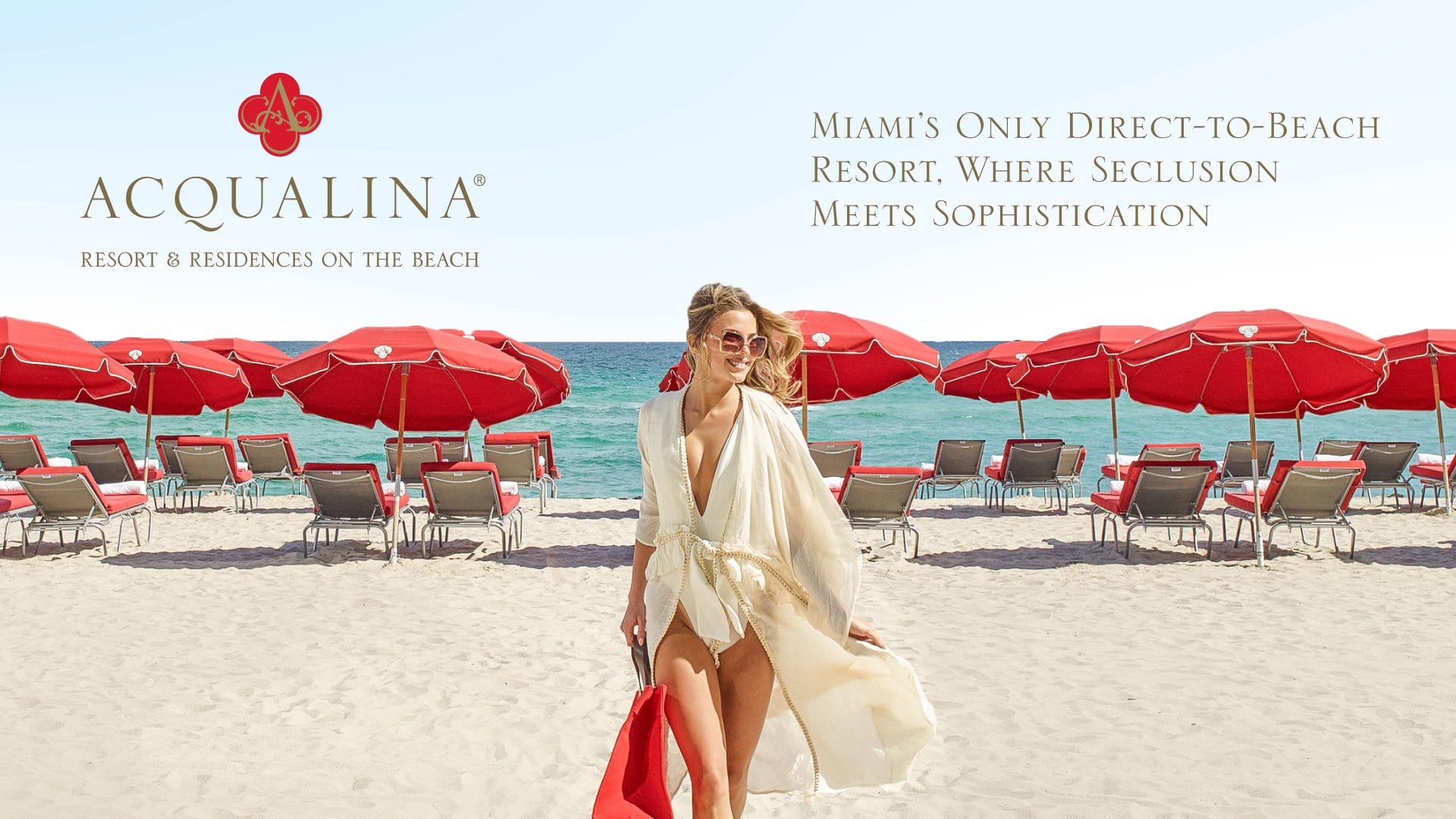
Acqualina Resort & Residences, the Forbes Five-Star, AAA Five Diamond property on Miami's beachfront, has relaunched its website following a ground-up rebuild by Digital Silk, a Miami-based digital agency. The project replaces a fragmented online presence with a conversion-focused platform purpose-built to reflect the resort's six-time USA Today "No. 1 Best Destination Resort" standing — and to turn that brand equity into direct bookings.
The Tech Stack
Digital Silk architected the new site around four discrete guest-experience pathways — accommodations, dining, spa, and events — each with its own UX logic and call-to-action flow. Underpinning the front-end is a custom CMS, a booking engine integration, interactive property maps, an event calendar, and a live beach camera feed. Mobile-first layouts and a video-led homepage carry Acqualina's visual identity across devices, a critical requirement given the share of luxury travel research now happening on mobile browsers.
Beyond the consumer-facing redesign, Digital Silk rebuilt the site's sitemap, navigation hierarchy, and URL structure with SEO, accessibility, WCAG compliance, and performance optimization baked into the architecture — not retrofitted. The Leaders Club loyalty program also received dedicated placement, giving repeat guests a clear digital entry point that supports retention alongside new-customer acquisition.
Operator Impact
"Luxury hospitality is built on the details, and the digital experience has to respect that," said Branko Stojanovic, VP of Digital Silk. "With Acqualina, the challenge was to create something that feels as considered online as the resort does in person."
For luxury hotel operators, the commercial logic is straightforward: OTA dependency compresses margins, and a high-converting direct-booking website is one of the most effective levers for improving net revenue per available room. By building distinct content pathways for dining, spa, and events alongside accommodations, the redesign positions Acqualina to capture ancillary spend — not just room reservations — earlier in the guest journey.
The engagement has since expanded into an ongoing digital partnership covering SEO, branded paid campaigns, and email marketing, suggesting the website rebuild functioned as a foundation for a broader hotel digital marketing strategy rather than a one-time project. That model — agency as retained digital operations partner rather than one-and-done vendor — is gaining traction among independent luxury properties that lack in-house martech teams but compete directly against branded chains with enterprise-level digital resources.
Guest reviews, award recognition, and CSR credentials are integrated throughout the site architecture, a nod to the growing body of conversion research showing that social proof displayed close to booking CTAs meaningfully lifts completion rates. For a property at Acqualina's price point, where a single converted stay can represent thousands of dollars in direct revenue, even incremental improvements in booking-page conversion carry significant top-line impact.
The Acqualina project reflects a wider shift in hotel technology investment toward direct-channel digital infrastructure — websites, loyalty platforms, and CRM integrations — as independent and boutique operators look to reduce OTA take rates and own more of the guest relationship from discovery through post-stay re-engagement.
Written by Michael Politz, Author of Guide to Restaurant Success: The Proven Process for Starting Any Restaurant Business From Scratch to Success (ISBN: 978-1-119-66896-1), Founder of Food & Beverage Magazine, the leading online magazine and resource in the industry. Designer of the Bluetooth logo and recognized in Entrepreneur Magazine's "Top 40 Under 40" for founding American Wholesale Floral, Politz is also the Co-founder of the Proof Awards and the CPG Awards and a partner in numerous consumer brands across the food and beverage sector.